
It’s not just what you say—it’s how you say it. You could say the most ridiculous, nonsensical things to your dog, but if you say it in a happy, upbeat, gentle voice, that tail will keep wagging. Conversely, you could tell your dog they are the absolute best creature on the planet, but if you scream it angrily, they will completely shut down. Your dog training voice matters.
Case Study 1: The Booming “Come”
In our Novice Obedience class, there’s an Australian Shepherd named Reese. Reese’s dad, Dan, is a tall, strong man with a deep, booming voice. He’s incredibly nice, but Reese is a “soft” dog—meaning he has a sensitive, gentle personality.
During a Recall exercise, Dan left Reese in a stay, walked across the room, turned, and boomed: “Reese, COME!”
Reese slinked across the floor, belly low, looking as though he expected to be punished. To our knowledge, Dan has only ever trained Reese with treats and praise. Yet, that single, intimidating tone was enough to frighten his dog. It’s not just what you say that matters – how you say it matters, too.
The Fix: We had Dan start over using a gentle, inviting voice. This time? Reese doubled his speed. He was still a little unsure, but his tail was up and he was visibly happier.
The Takeaway: Tone matters. Volume matters. Your dog is always reading your energy.
Case Study 2: The Brother vs. The Dad
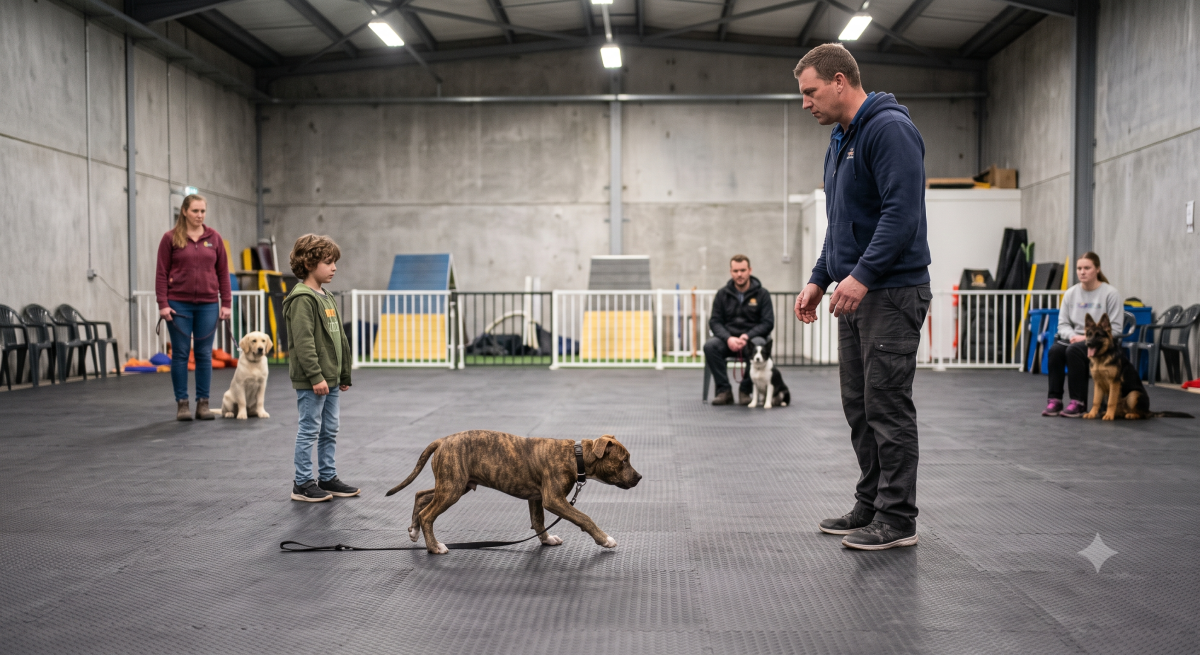
We saw an even bigger contrast in our Puppy class with Zeke, a four-month-old pit bull puppy. Zeke was a sponge—sweet, inquisitive, and eager to learn.
Zeke’s dad, John, is a big guy with a naturally powerful voice. But John’s nine-year-old son was also in class. Watch how Zeke reacted to the exact same cue from two different people:
- The Brother: “Zeke, Come!” (High, excited tone) = Zeke bounces across the room, thrilled.
- The Dad: “Zeke, Come!” (Deep, authoritative tone) = Zeke turns away, looking for an escape route.
John took the feedback beautifully. Once he tapped into his “inside voice” and spoke gently, Zeke came bounding over to him, too.
“Commands” vs. “Cues”
Traditionally, dog training has been about teaching dogs to obey commands. That word choice has seeped into our collective brains, making people think they need to sound like a drill sergeant to be respected.
This mindset is part and parcel with disproven, damaging “dominance” and “alpha” theories.
At 2-Minute Trainer, we make a conscious effort to use the word cue instead of command. When you think of a cue, picture a stage manager whispering a helpful reminder from the wings, not a dictator barking orders. Changing the word changes your attitude.
Soften the Image
There are plenty of social media trainers whose entire brand relies on projecting strength, dominance, and intimidation. Next time you stumble across one of their videos, don’t look at the trainer. Watch the dogs.
- Are their tails wagging?
- Are their bodies relaxed?
- Do they look like they’re having fun?
We have dogs to make our lives happier, better, and more connected. The next time you ask your dog to do something, lose the drill sergeant voice. Cue your dog with a smile—both on your face and in your tone.