Tired Dog? Why Training Games Beat Long Walks | 2-Minute Trainer

Spread the love

The Cardio-Monster Trap: Why Your Dog Isn’t Tired

We’ve all heard the old saw: “A tired dog is a good dog.” But you may be surprised to find that the fastest way to achieve “tired” isn’t long walks or endless games of fetch—it’s training games.

When you think about it, it’s perfectly logical. If you always take your dog for jumbo walks to tire them out, you aren’t actually calming them; you’re building an incredibly fit canine athlete. While you’re ready to crash on the couch after three miles, your dog is riding a wave of fresh endorphins and peak conditioning. To tire them out tomorrow, you’ll have to go four miles. Then five. Unless your goal is to raise a cardio-monster that can outrun a marathoner, it’s time to get off the hamster wheel.

If you want a calm, contented companion, it’s time to work the brain as well as the body.

Train Smarter, Not Harder

Remember how exhausted you felt after final exams in school? You weren’t running laps, but your brain was “fried.”

Think of dog training games as the canine equivalent of a daily pop quiz. Playing a single training game for just two to five minutes is the mental equivalent of a half-hour of fetch. Because these games are so intense, dogs actually need “down time” afterward to process what they’ve learned and recuperate.

Know the “I’m Done” Signals

Especially when teaching a new game, you can almost see the steam rising from your dog’s head. It’s an intense experience! It is vital to notice the body language signals your dog gives when a session becomes “too much.”

Watch for these signs of mental fatigue or stress:

  • Disengaging: Walking away or sniffing the ground.
  • Displacement Scratching: Scratching that isn’t an itch; it’s a “brain break.”
  • Panting: Heavy breathing when it’s not actually hot.
  • Yawning: Even if they aren’t bored or sleepy.

If you see these, your dog might be confused or worried about getting things “wrong.” Don’t give up! Try a quick “reset” by moving a few steps away and offering some encouragement: “You can do it! Let’s try it again!” If they still aren’t having it, end the session. There’s always another opportunity to play.


The 2-Minute Drill: “Sniff It Out”

You can test the impact of mental work right now with a quick version of Sniff It Out:

  1. Prep: Put a tiny dab of peanut butter on a plastic lid (prepare 3 or 4 lids).
  2. The Hook: Give your dog a quick whiff of the scent so they know the target.
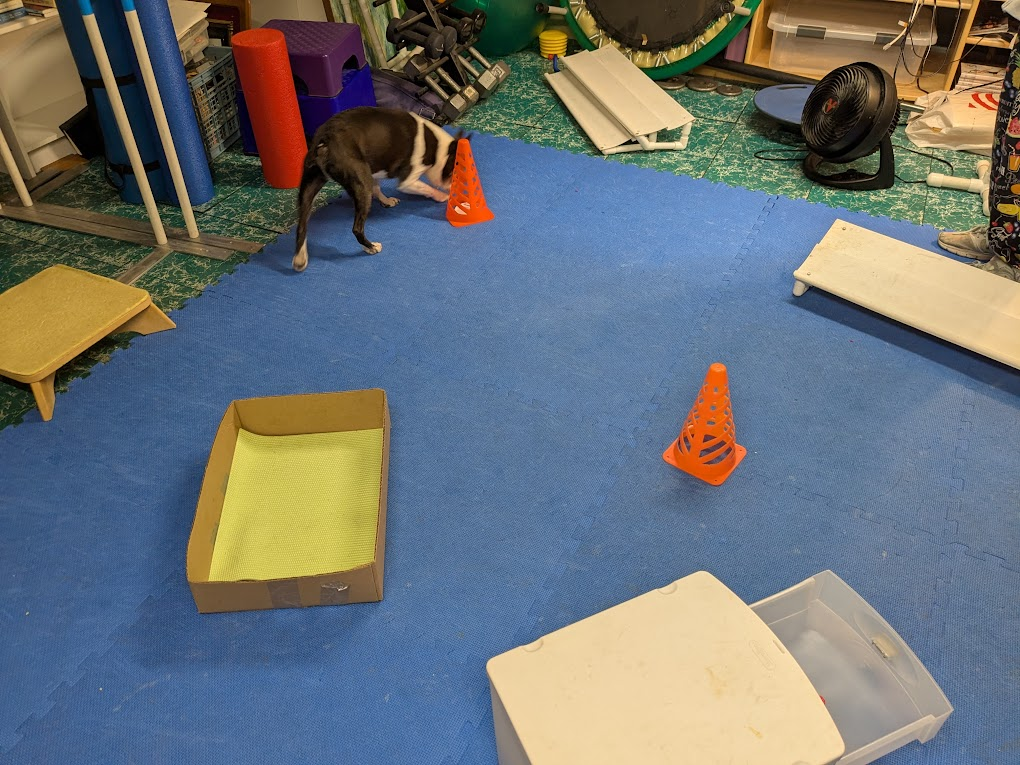
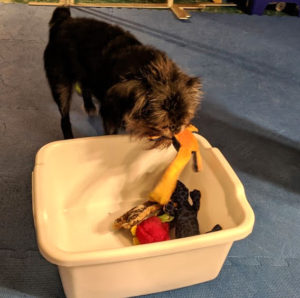
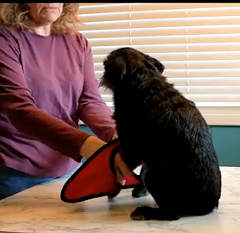
  3. The Hunt: Hide the lids around the room and let them loose. (In the photo, you see Booker sniffing for those peanut butter lids.)
  4. The Assist: Walk slowly around the perimeter to encourage your dog to check every nook and cranny.

Being an ace scent-finder is hard work! After finding those few treats, don’t be surprised if your dog heads straight for a nap. You’ve achieved tired with a fun training game.

The Best of Both Worlds

Physical fitness is important for a long, healthy life. But when you work their brains as well as their bodies, you get the best of all worlds: a fit dog who actually knows how to relax.

“Carry It!” — Turning a Cute Trick Into a Dog Life Skill

Spread the love

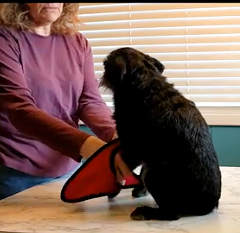
Is there anything cuter than a little dog carrying a little bag? How about a little dog named “Doc” with a signature doctor’s bag? This little guy belongs to a friend of ours who started the dog training game “carry it” as soon as they step foot in her house. Her long-term goal isn’t going viral—it’s Obedience competition. If they achieve a bit of notoriety before they’re ready to earn those titles, it’s a little bit of serendipity. Not to mention bringing a smile to everyone who sees it.


Breaking Down “Carry It!”

There are lots of parts to this game, and all of them deserve attention. If you try to skip steps, you’re building on a slippery foundation. If the dog “loses his place” in the middle but knows all the parts, they can pick up where they left off.

The 5 parts of “Carry It!”:

  • Pick It Up
  • Hold It
  • Move With It
  • Go To A Target
  • Drop It

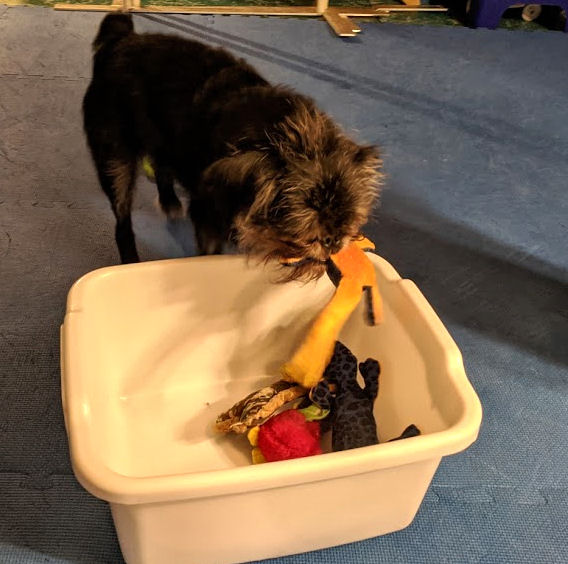
None of these parts is alien to your dog; they do them all the time. The difference is doing it when asked, with the object you choose, and taking it to the target you select. You can think of it as turning “Fetch!” into “Put Your Toys Away.”


Part 1: The “Secret Weapon” (Pick It Up)

You can use whatever object you like, as long as your dog is physically able to pick it up. In our classes, we actually use a clean, empty tuna fish can.

While it’s easier to get a dog to pick up a toy, the point of the game is for them to pick up the object you ask them to, even if they don’t care about it. As far as we know, no dog cares about an empty can. Using a low-value object also makes it much easier to get the dog to let go of it later.

  • The Method: Put your tuna can on the floor and stare at it.
  • The Reward: Reward any interaction your dog displays—looking at it, sniffing it, or pawing it.
  • Pro Tip: Reward three or four times near the object, but don’t drop treats in the can.

    Note: This step may take more than one two-minute session. That’s okay. Once they catch on, you’ll be able to get them to pick up anything, anywhere.

Parts 2 & 3: Hold It and Move With It

Motion on your part will trigger motion from your dog. As soon as the dog picks up the object, start moving in the direction of your target container.

  • The “Oopsy” Factor: Most dogs will drop the object as they follow you. If they do, stop and stare at the object again.
  • Encouragement: If they don’t seem to understand, use your voice: “You forgot something!” or “Oopsy, you dropped it!”
  • The Win: You’ll know they have this down when they keep hold of the object while taking a step or two toward you.

Parts 4 & 5: The Target and The Drop

Keep the target container very close when you’re introducing the game. You can increase the distance as your dog gains confidence.

  • The “Smelly Treat” Trick: If you have trouble getting the dog to let go, have an especially delicious, smelly treat handy.
  • The Delivery: Hold the treat directly over the container. When your dog reaches for the treat, their mouth will open, and the object should fall right into the box.

Use All Your Tools

This game uses lots of different aspects of training: persistence, initiative, and modeling. If you’re ever stuck, try to “rephrase” the question. If your dog isn’t being creative, show them how to do it. Let them mimic your actions.

When Hope was teaching her dog Teddy the Ring Stacking game, he just wasn’t catching on. Until, out of a bit of frustration, she picked up a ring, told him “Do it like this!”, and put the ring on the cone herself. Darned if he didn’t do just that on the next try.

Don’t give up on your dog, ever. Just come at the issue from a different angle. You never know what will click into place until it does just that.

Dog Training for Elevators: Navigating Choke Points in Apartments

Spread the love

Choke points like hallways and elevators can be nightmares for dog people. If you live in a multi-unit building, your dog’s behavior has implications beyond your four walls – too many neighbor complaints can even threaten your housing status. This dog elevator training tip can help you navigate those choke points.

The “Surprise Factor”

The hardest part of shared housing is the lack of predictability. You never know who – or what dog – is around the corner. Even friendly dogs can react poorly when startled. We’ve all bumped into someone inadvertently; for us, it’s an “excuse me.” For a dog, it’s a high-stakes confrontation.

From the dog’s perspective

Elevators must seem like strange magic from your dog’s point of view. Doors open. You step into a hushed, windowless box. Doors close, with no obvious escape point. When the doors reopen, you’ve been magically transported to a completely different place. Different sights, sounds, smells, and surprises.. 

When you think about it, it’s kind of amazing that dogs get in elevators at all. Just that simple act of getting in an elevator is a profound example of how much your dog trusts you.

We’ve talked many times about how dogs gain confidence and security with routine. If you’ve established a pattern for elevator rides, your dog will be more likely to stay with your game than stick his nose in your neighbor’s crotch. 

Familiarity breeds calm

So instead of hoping for a calm ride, give your dog a clear plan. Routine is the antidote to anxiety. If you establish a “game” for the ride, your dog will stay focused on you rather than your neighbor’s grocery bags.

  • The “Touch!” Game: This is a top-tier elevator tool. It keeps your dog’s nose on your hand and their mind on a high rate of reward.
  • The “Target!” Game: If your dog has a favorite portable target, use it. It’s worth the extra effort to carry if it keeps them “in the zone.”
  • The “Job” Strategy: Give them something to do. Teaching your dog to carry a favorite toy provides a single focus.

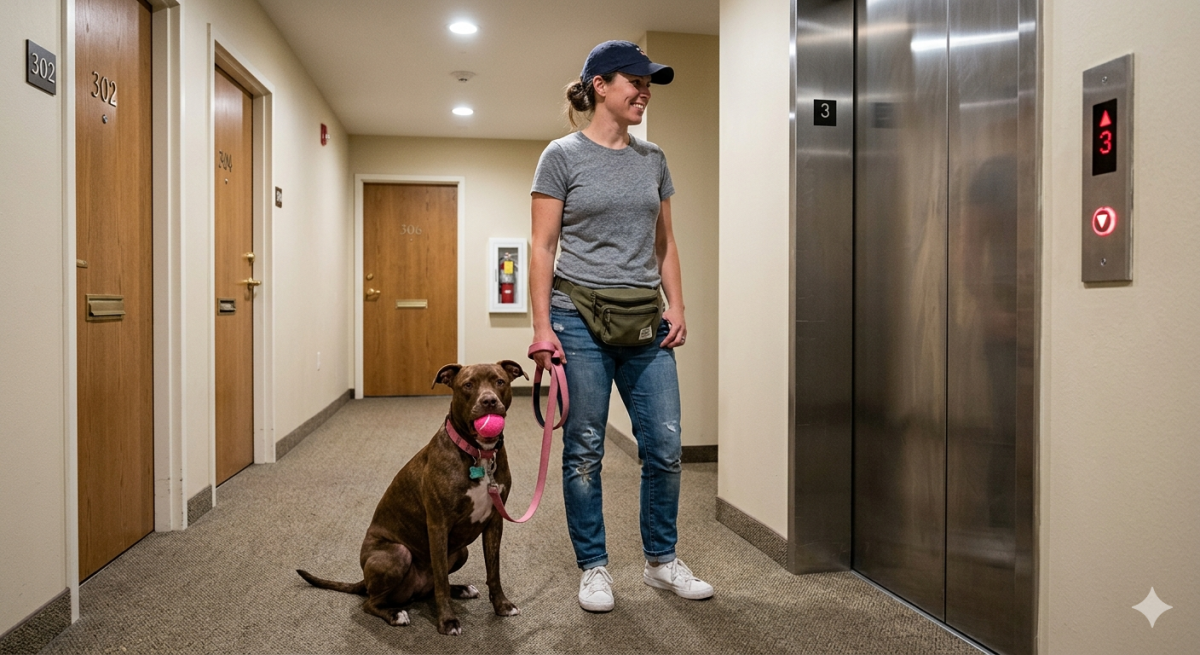
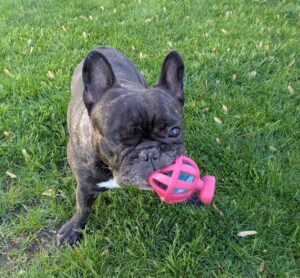
Real-World Example: Hope’s Frenchie, Torque, used to get unwanted attention because of his “snorty” breathing (other dogs thought he was growling). Hope solved this by letting him carry his pink rubber ball. Now, other dogs see the toy, and neighbors just think he’s cute.


A Quick Pro-Tip

Keep treats by your keys. If you grab one, you grab the other.