When is Dog Training Actually Done? (Spoiler: Never!)

Spread the love

When is training done?

Most people will take an obedience class when they get a new dog or puppy. Then, unless a major behavioral issue pops up, we never see them again.

And honestly? That’s fine.

There’s a great saying among dog trainers: “Every dog is trained to its owner’s level of comfort.” If a specific behavior matters to you, you’ll make sure your dog knows the rules. If you don’t care, it doesn’t matter.

That’s exactly how it should be. Your house, your dog, your rules. If you don’t want the dog on the couch, you teach them to stay off (at least until the front door closes behind you). Everyone understands the assignment, and the household rolls merrily along.

Training is more than just “The Rules”

But real dog training isn’t just about enforcing boundaries like keeping paws off the furniture. That’s a small piece of the puzzle.

Playing quick training games with your dog throughout their life is about ensuring these amazing creatures have the biggest life and the most fun possible. It’s how we repay them for their unconditional love and enduring companionship.

You may not have the time, energy, or budget to compete in dog sports. You don’t have to. You may not have access to weekly training classes. That’s fine, too.

But you should be willing to spend just a couple of minutes every day focused entirely on the dog you love. Just that microburst of attention leads to a stronger, deeper bond that cements their “best friend” status.

Let’s make it more fun

The biggest problem here is the terminology. “Training” sounds like a chore. “Playing Training Games” sounds better, but it still shades into the work zone. We wish there was a word to describe it without all the hefty baggage.

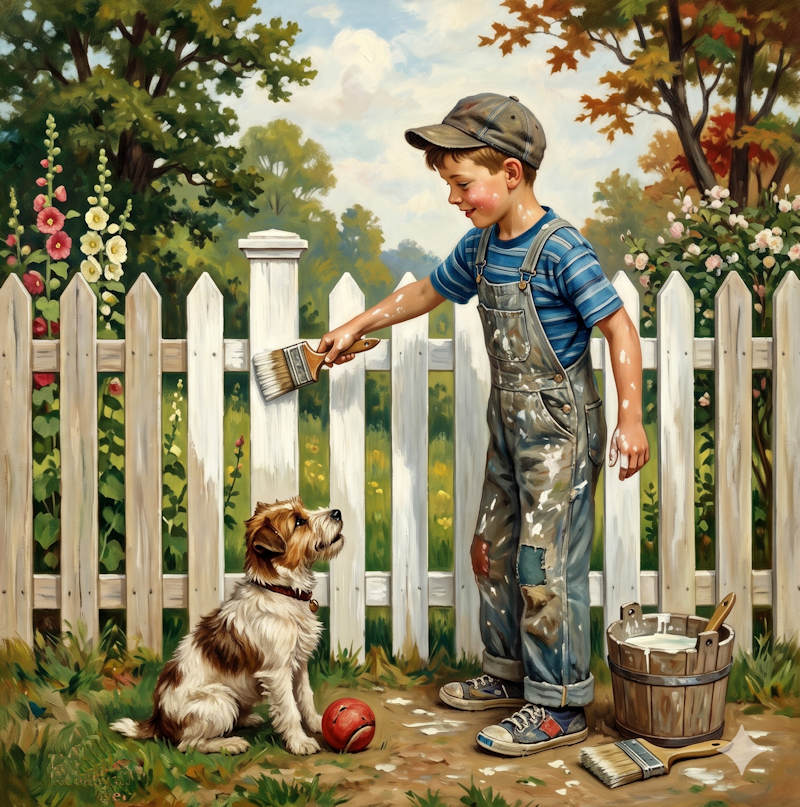
Maybe we should adopt Huck Finn’s strategy and dare people to play training games. A good “betcha can’t” is irresistible—most of us would rather die than admit we failed a challenge!

So here’s the challenge:

  • Teach your dog a new trick every month.
  • Get it on video.
  • Post it online.
  • Count the reactions and comments.
  • Bask in the glow of your team’s triumph.

Not only will you have a blast playing with your dog, but you’ll love seeing the reactions to your dog’s awesomeness. (And yours!)

Never stop having fun with your dog

If you stack up enough tricks, you can even apply (via video!) for the Trick Dog titles offered by the AKC. It’s not just a piece of paper to frame; it’s an enduring record of your dog’s accomplishments. For as long as the American Kennel Club exists, there will be proof that your dog was loved, and your relationship mattered.

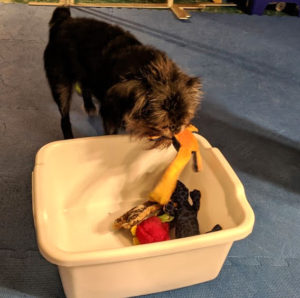
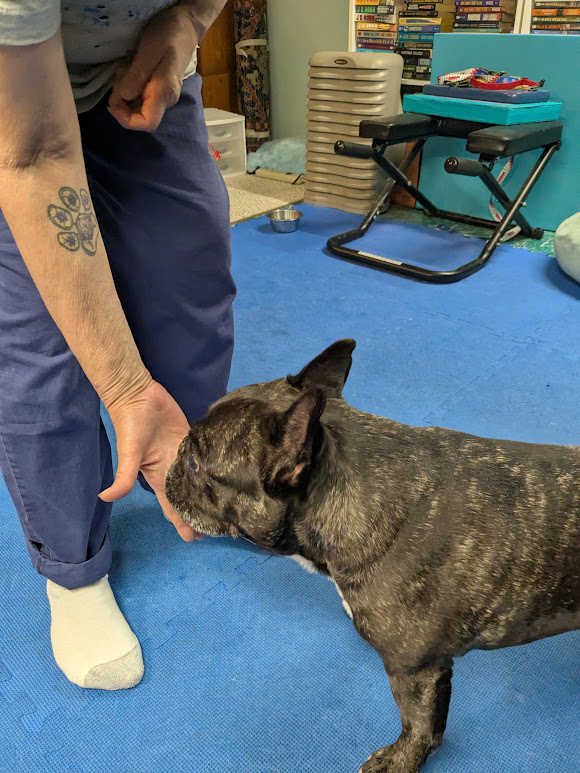
Fran has trained Tango (Brussels Griffon) to put his toys away, into a bin.

When you carve out those precious few minutes every day with your dog, you can forget about all the stressors of everyday life. Each day, those five minutes can bring you pure joy—for the entirety of your dog’s short, special life. Because no matter how long they live, it’s never long enough.

We lost Tango, Fran’s Brussels Griffon, last November at the age of 16. He played training games every day, right up until his last couple of days. The distance he walked to “Put Your Toys Away” diminished as he aged, but he still played. He absolutely loved it. And we loved celebrating his achievements every single day of his life.

Why Running Away is the Best Way to Save Your Dog’s Life

Spread the love

Running away can save your dog. Yes, dogs can be bribed, but it’s usually not worth the effort. You can be holding the juiciest, most delicious-smelling ribeye ever grilled. But if your dog is rolling on a dead worm (or something worse), they won’t care. That steak doesn’t even exist in their aromatic nirvana. Yelling “Dog, COME!” isn’t going to work.

That’s a life-threatening problem.

“Come” is one of three cues that can save your dog’s life. (The other two are “Stay” and “Drop It.”)

Imagine the internet tech left the gate open. You didn’t notice, the door opens, and your dog makes a mad dash for the street just as a car is turning the corner. What’s the best way to get them to turn around?

The answer makes complete sense, yet most people struggle to do it: The most effective way to get your dog to come to you is to run away at top speed, yelling their name.


Why Running Away Works (The “Chase” Factor)

It feels completely counter-intuitive. When your dog is running toward danger, every fiber of your being screams to run toward them. But to a dog, you running at them is either:

  • A Game of Tag: “Oh boy! Mom is joining the fun! I run, she runs, we all run!”
  • A Threat: If you’re yelling and charging, a sensitive dog might actually bolt faster to avoid the “angry human” coming their way.

By running away, you flip the script. You trigger their predatory chase drive. Suddenly, you are the most interesting, fast-moving thing in the environment. Their brain switches from “I’m exploring” to “I have to catch my human!”


The 2-Minute Game: The Chase Recall

Getting your dog to chase you works with the dog’s natural instincts. It works even better if the dog knows the “Chase Recall” game and loves it. You get your dog to love the game by playing it frequently with high-value rewards.

If your dog has a reliable “Stay!” cue, you can play “Chase Recall” by yourself. If your dog’s “Stay!” isn’t great, you’ll need either another person or a heavy piece of furniture with legs.

How to Play:

  1. Set the Stage: Have your dog sit and stay.
  2. Build Tension: Walk half the distance of your space, turning every couple of steps to look over your shoulder and prompt your dog: “Ready?” “Ready?”
  3. The Release: Take off running to the other side, calling your dog’s name. (If you have someone holding the dog, they should release them the second you say the name).
  4. The Celebration: When your dog reaches you, celebrate! Many treats, pets, and dance for joy.

The Golden Rule: You always, every single time through their entire life, reward your dog for coming to you.


All Alone? The “Furniture Version”

If your dog doesn’t “Stay!” and nobody else is around, you can play by yourself with some precautions:

  • Put a long line (10 to 15 feet) on your dog’s collar or harness and feed it around the bottom of a heavy piece of furniture.
  • Your dog should sit near the furniture, but not too close.
  • While you’re still close to the dog, take up most of the slack and hold the dog in place as you walk a couple of paces away.
  • When you have a little distance, drop the line and run, calling your dog’s name.

Safety First: When using the furniture version, ensure the line is fed around a smooth, sturdy surface so it doesn’t snag or tip anything over.


Pro Tip: Prevent the “Recall Gap”

To be sure you can get hold of your dog when you really need to, make a habit of grabbing their collar or harness as you’re rewarding them for coming. Let it go immediately.

Your dog will get used to you reaching for them and will learn that the fun doesn’t stop just because you held on for a moment. This prevents the “Recall Gap”—where a dog comes close but dances just out of reach.


Make it a Favorite

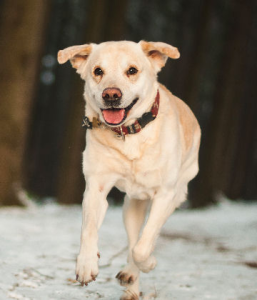
A reliable recall is crucial. Knowing your dog will come when called gives you tremendous peace of mind. Practice often, even after your dog already knows the game. You never know when you’ll need it. And it’s better to have something and not need it than to need it and not have it.

The 2-Minute Challenge

Set a timer for 120 seconds right now. See how many “Chase Recalls” you can fit in before the buzzer goes off. Keep it fast, keep it happy, and stop while they still want more!

When to Fire Your Dog Trainer & Finding the Right Fit

Spread the love

How’s That Working For You? (And When to Fire Your Dog Trainer)

You didn’t get a dog to add a line item of stress to your life. You got a dog for the zoomies, the companionship, and the “welcome home” wiggles. If your dog is currently causing more headaches than happiness, that’s a problem. But if the “experts” you’ve hired aren’t actually helping, that’s an even bigger one—especially if they refuse to acknowledge your unique life, your schedule, or your dog’s specific quirks. Here’s how to know when to fire your dog trainer.

Dogs Aren’t “One Size Fits All”

As varied as their coat colors are dogs’ personalities. A rescue from a rural farm has different needs than a puppy from a suburban breeder. Your family dynamics matter. Your living situation matters. Anyone you turn to for help should be treating those factors as essential data, not inconveniences.

Fire Them Immediately

One of the biggest red flags in this industry is a trainer who claims their method works for “every dog, every time.” That “my way or the highway” attitude is a one-way ticket to burnout for both you and your pup.

You need a trainer who:

  • Listens more than they talk.
  • Remains flexible and creative when Plan A fails.
  • Suggests solutions that actually fit into your real life, not a textbook.

This Isn’t A Sales Pitch

We aren’t here to tell you to “buy now” for a private consultation. Look, we’re fantastic trainers—we know our stuff. But for most people, the gold standard is hands-on training.

Sometimes you need a professional in the room who can see the subtle flick of a tail or the exact timing of your reward. While we’re here for “2-minute” fixes, perspectives on training, and ideas for new games, we’ll always be the first to tell you when you need a local pro to step into the ring with you.


Flexibility in Action: The “Archie” Case Study

We love it when people bring the whole family to our training classes. This week, Archie’s whole family showed up—mom, dad, and his two-legged sisters. They brought a specific dog-walking issue with them: How do they get Archie to behave when the rest of the family is walking a few steps ahead?

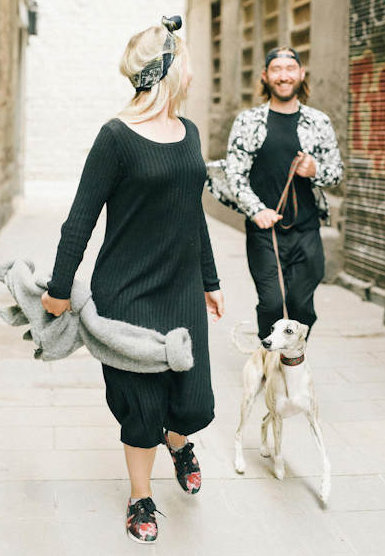
It’s a common issue, even if it’s rarely talked about. Dogs are pack animals; they like it when everybody is within reach and they can keep an eye on their people. When part of the family “breaks rank” and moves into the distance, dogs can get anxious and start pulling to close the gap.

Just because a problem isn’t in the standard training manual doesn’t mean there isn’t a solution. Here is the spur-of-the-moment game we created for them:

The Family Walk Game: “Stop And Go”

  • Step 1: The person holding the leash is the “Game Lead.” Everyone else stands a few steps in front of the dog.
  • Step 2: The Game Lead says “Go!” and everyone starts walking. (The dog will likely pull to reach the front group).
  • Step 3: The Game Lead says “Stop!” the second the leash gets tight. Everyone freezes.
  • Step 4: Wait. The moment the dog releases tension on the leash and looks back at the Game Lead, they get a treat.
  • Step 5: “Go!” again. Repeat the process, rotating who holds the leash so Archie learns the rules apply to everyone.

Archie started catching on in just three repetitions. He’s a smart boy—he knows who’s holding the treat pouch.


Speak Up For Yourself (And Your Dog)

There are multitudes of dog trainers and methods out there. With training, like everything else, you have to be a savvy consumer.

If something doesn’t feel right, don’t do it. If anyone ever tells you to do something to your dog that makes you uncomfortable, walk away. And if the advice you’re getting doesn’t work, let the trainer know. If they can’t pivot to “Plan B,” be willing to find someone who can.Training should make your life better, not harder. If it isn’t… how is that working for you?