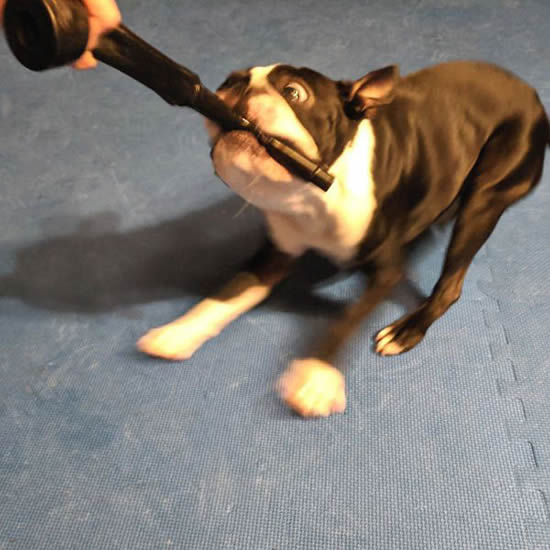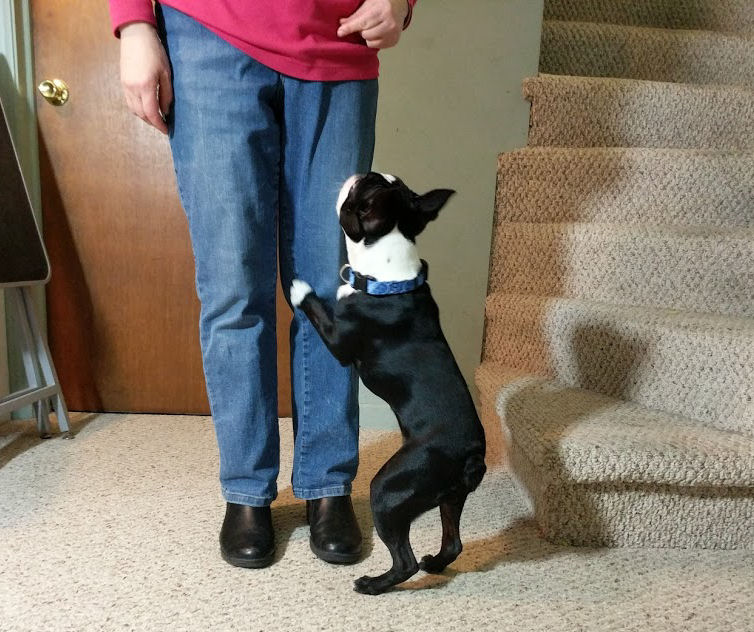
Simon got blamed for something he didn’t do.
Simon was innocent! Hope offered sincere apologies for her unjust accusations. He graciously accepted, mostly because the proffered “sorry” came with a side of raw brussels sprouts and some fast dog training.
Setting the Scene
Sunday mornings in the 2-Minute Trainer household are for weekly meal prep. For the people, not the dogs. (The dog food is a monthly, all-day marathon session involving an empty freezer, a full oven, and at least three dishwasher loads.)
Anyway, we prep lots of vegetables for the week. We love grain bowls for lunch, and since we’re dog trainers and not one-percenters, we make them ourselves. This week, the featured veggie was brussels sprouts. If you’re not a fan, just picture mini, green meatballs.
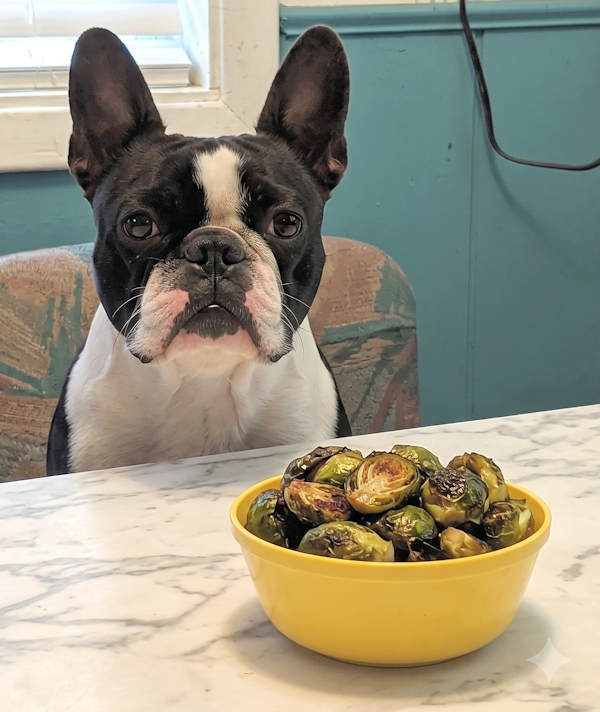
As always, food prep is rigorously supervised by Simon.
Simon has his dedicated chair at the kitchen table where he can see everything. His primary goal? Pounce on anything that gets dropped, barreling through anyone or anything in his way, leading with pure greed and teeth.
Predictably, a round sprout rolled over the edge of the table. Faster than Hope could lean over to pick it up, Simon vacuumed it up. The sprout was gone. Disappeared.
Hope was half-furious that he was rude enough to not even allow time for a “Leave it” cue, and half-terrified that he’d choke. She picked Simon up immediately. But the mini-cabbage was nowhere—not in his mouth, not caught in his throat, and not under the table.
Time for Training
It’s been a Simon “quirk” all his life that he dives immediately for dropped items. We’ve never had a dog so desperate to get there first. At the first sound of something hitting the floor, he’s there. Get out of the way or get bowled over.
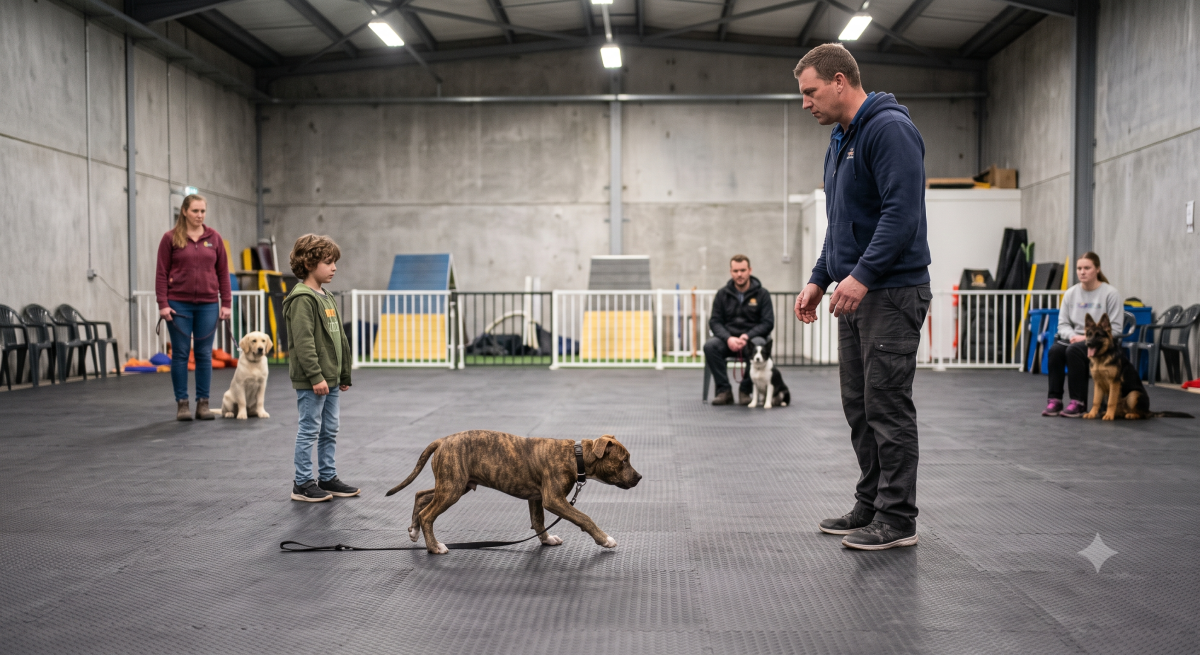
Time to turn that around. Simon needed to learn that good things come to those who wait. On the spot, we put the cooking utensils aside and played a brand-new training game.
How to Teach the “Drop-and-Leave” Game
- Step 1: Secure the dog. We put a collar and leash on Simon so we could safely manage his reach.
- Step 2: Prep the bait. We grabbed a pile of celery (our chosen training veggie for the day).
- Step 3: The Drop. Hope dropped a large piece of celery on the floor while Fran gave the “Leave it!” cue.
- Step 4: The Boundary. The first time, Simon dove for the celery, but the leash ran out of slack before he could reach it. Realizing he couldn’t get it, he sat down.
- Step 5: The Reward. The moment he sat, Hope rewarded him with a different piece of celery from her hand, then picked up the dropped piece.
Rinse and repeat. After just the third repetition, Simon stayed in place as the veggie hit the floor, looked up, and waited for his reward. He got plenty.
No Training is Wasted
So far, so good. A couple minutes of training. Boundaries enforced. Rewards delivered. It was a lesson we probably should have taught Simon a long time ago.
But while it’s never too late to train, we later discovered this specific incident wasn’t actually Simon’s fault.
Later that day, Hope was out in the backyard with her Frenchie, Torque. She glanced down and noticed something weird tucked into the cuff of her pant leg.
It was the missing sprout.
Oops. Simon got a formal apology, a scratch behind the ears, and plenty of “oops cookies.”