Despite all evidence to the contrary, most people expect things to go right. Everything will be okay. It all works out in the end. And there’s an absence of action. In dog training, we have to reward that absence. Catch them being good.
Asked to describe human nature, most people wouldn’t use the word optimistic—especially these days. But we must be. We rarely react to good things, but we freak out when things go wrong.
Dog training fits this exact pattern. How often do you make a fuss over your dog being awesome, versus losing your cool when they’re naughty?
Case in Point
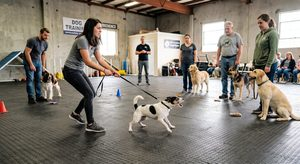
There was a new dog in our Rally class last night. We first met Molly and her mom, Ellen, in puppy class. Molly was initially timid after recovering from a broken leg, but she caught up quickly and was soon in the thick of the puppy scrimmages.
Time passes and life happens. Molly is now a year old and hasn’t been in class since. Brought into a new venue with unfamiliar dogs, she reverted to barky, timid, lunging behavior. Some dogs, like people, get bigger and louder when they feel anxious.
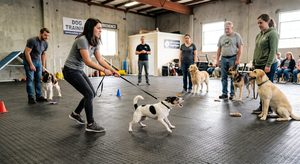
Ellen did what everyone does when their dog acts up in front of strangers: pulled on the leash, told her to calm down, and pleaded with her to be quiet. It failed, of course. But owners do it because it feels like action, and it shows others they’re trying.
The result? Molly’s misbehavior got tons of attention. Dogs love attention. Bad behavior was inadvertently rewarded.
Going In For The Fix
We told Ellen to try something else. Step away from the crowd and give Molly distance to acclimate. (We talk about adding distance on walks with the Rule of Thumb.) When she acts like a jerk, ignore it. Don’t correct, don’t plead, don’t yank the leash. Just wait.
When your dog looks without barking, watches without lunging, or finally sits—that’s when you pounce with effusive praise, treats, and pets. Reward the behavior you want!
Is it easy to stand there and watch your dog’s drama unfold? Of course not. But you cannot regulate your dog’s emotions. They feel how they feel, and they’ll only learn self-control if you let them figure it out.
Stop Rewarding Badness
Catch them being good. Pay attention, and reward your dog even when “nothing” is happening:
- You’re at the park, a cyclist whizzes by, and your dog does nothing? “Good Dog!”
- A dog walks by your house and your dog gives just a quiet “whuff”? “Good Dog!”
- Your child shrieks at a spider and your dog stays calm? “What A Good Pup!”
Your dog will never figure out what you want if you only pay attention to the bad stuff.
Communicate Clearly
Think about your own job. How much more motivated are you when your boss notices a great project, versus only hearing about your mistakes? If all you get is criticism, your enthusiasm goes straight downhill.
If your dog only gets feedback when they’re wrong, they won’t know what right looks like. Doing the “right” thing shouldn’t be taken for granted. Notice it. Celebrate it. Act like it’s special—because it is.