What’s your mental picture of a well-trained dog? If it’s one of those impressively heel-hugging automatons garnering views on social media, this isn’t the training site for you.
If, on the other hand, you want an awesome companion who knows how to make good decisions, this is the place. The goal here is to teach you and your dog to be a team, whether competing in dog sports or just hanging out watching screens. It may not be an equal partnership. You’re always going to be the one making important life decisions and keeping food on the table (or in the bowl). But you will have an awesome junior partner.
Whatever training games you play, how often you play them, and what behaviors are most important to you, you decide. Keeping these five top dog training tips in mind will keep you on track, whatever your dog goals may be.
Pay your dog
You wouldn’t take a job that doesn’t pay. Don’t expect your dog to “work” for free. When they do something right, a reward lets them know.
The reward doesn’t always have to be food. But you don’t get to decide what’s rewarding to your dog. If you love chocolate, someone giving you a banana isn’t going to cut it. If your dog loves Chicken Heart Treats, a piece of kibble isn’t going to be highly rewarding. Tailor the treat to the dog’s taste.
Shut up
Almost everybody does it and it never works. Saying “Sit!” 12 times instead of once isn’t helpful. By all means encourage your dog and talk to them. But give them time to think and process what you say.
Dogs naturally love patterns. If you always say “Sit!” three times, your dog will think that’s the command. If you say it once and wait for your dog to do it (look at their butt, not their face), they’ll figure it out.
Be consistent
Each word and each hand signal can have only one meaning for your dog. It doesn’t matter what word or motion you use, as long as it’s the same every time you use it.
If you’re teaching your dog “Place!” you can call the “Place!” whatever you want. Our students have used “Mat!” and “Bed!” and assorted other words. Whatever word works for you is fine. But remember what it is and keep it the same.
Be clear
Decide what you want and stick to it. If you say “Sit!” and your dog lies down, don’t accept it. That’s not a “Sit!”
This is more than just being picky. Even if you don’t care whether your dog sits or downs, you’ll confuse your dog if you accept one for the other. They won’t know what either one means.
Half measures aren’t acceptable either. In competitive Obedience and Rally, “Down!” means that the dog’s elbows are on the ground. Setting specific criteria for behaviors actually helps your dog understand.
Have fun
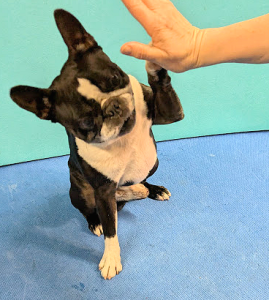
Training is all about having fun with your dog. Play as many training games as you like, but keep each one short and fast. Your dog will look forward to playing with you. If you’re in a lousy mood, playing with your dog will improve your outlook and your day.
You’ll find your dog anticipating training games as the best part of your day. If you play at a specific time every day, your dog will come and find you when it’s time. Those few minutes of focused interaction will be their favorite time, every time. And keeping these 5 dog training tips in mind will help you make the most of every session.