If you think your dog is demonstrating impulse control when they sit motionless waiting for their food, you’re wrong.
You’re also wrong if you think impulse control is greeting guests with all four paws planted on the floor.
Both of these examples are trained behaviors, not impulse control. They’re both excellent things to teach your dog. But neither teaches the dog impulse control
What is impulse control?
Simply put, impulse control is the ability to think before you act and make good choices. In the examples, the dog has no choice. They’ve been taught what to do in each scenario and they’re doing it. They’re not “choosing” to be good. They understand what they should do and do it.
Years ago it was considered good dog training to tell your dog what to do at all times and make them do it. Our first mentor in training said “Never let a dog make a decision. They’ll always make the wrong one.” Fortunately, he’s changed since then. Now we know that good dog training is teaching dogs how to make good decisions. Impulse control is at the heart of good decision-making.
Ready for anything
Trained behaviors, like waiting to be released before eating, are perfectly fine for things that happen all the time. Mealtimes probably happen about the same time, in the same place, and in the same order every day. It’s an entirely predictable sequence that both your and your dog know and one that works for you.
Impulse control is the valuable tool your dog will need when confronted with different, unexpected, and unpredictable circumstances. Dogs’ innate instincts tell them they have two options, fight or flight. Dogs taught impulse control know that their first reaction isn’t necessarily the right one.
Give them the tools
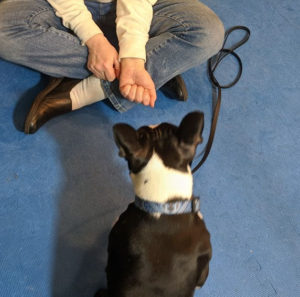
If your dog acts without thinking it’s time to teach them the skills they need to make good decisions. A good place to start is our e-book Impulse Control.
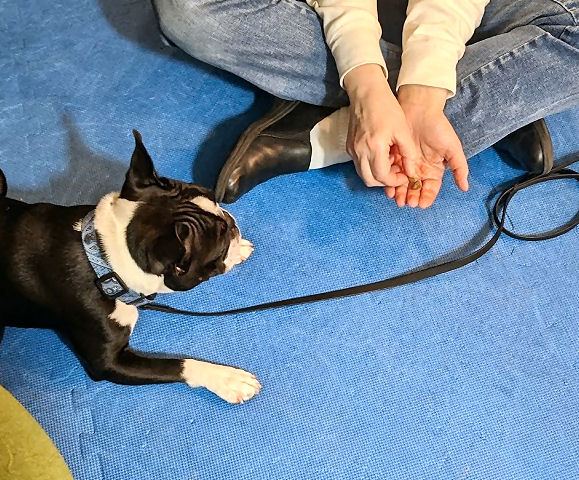
Just this week we taught the game “Whatcha Gonna Do?” to our competition Obedience class. One woman, who has a Labrador Retriever, was convinced her dog would never catch on. He continued to lick and nibble on her hand, not trying anything else. But it only took about five minutes before he got the idea. She was ready to give up after three. Impulse control training may test your patience, as well as your dog’s. But many worthwhile things in life aren’t easy.
It may not be the fastest, most entertaining training game you play with your dog. But it may prove to be the most valuable training you ever share with your dog.