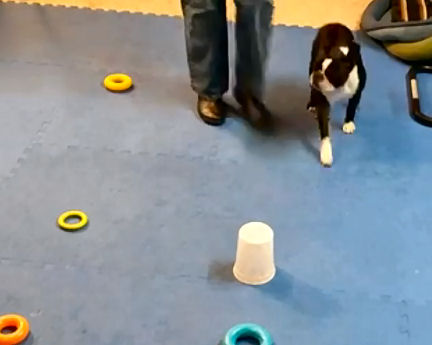
The hardest skills for dogs are the ones that aren’t natural. Of course the same is true for humans. People naturally want to help their dogs succeed, so patience/waiting is the hardest part of dog training. For dogs, who want to be with their people, the most difficult skills are staying and going.
That sounds contradictory, but it’s not. Both the “Stay!” and the “Go out!” usually involve separation between you and your dog. If you have a good training relationship with your dog, they want to be near you. Always. The closer the better.
Too much of a good thing
You might think that creating a strong bond might pave the way for unwanted behaviors like separation anxiety. Instead, it actually helps reduce the issue. Dogs with strong training-game experience tend to be more confident and able to deal with everyday anxieties more easily. They’ve been taught how to make good decisions and to persevere through stress.
It’s one thing for the dog to deal with your routine absences. You probably have a familiar ritual you follow every morning as you leave. It’s probably been choreographed down to a science, with singing out “Be good!” the last thing as you sail out the door.
While dogs don’t know where you’re going or what you’ll be doing there, they never did and probably never will. You don’t miss what you’ve never known. And they don’t have an option. However, a command to “Stay!” requires that the dog actively work against their own instinct to accompany you wherever you go.
“Go out!” is just as difficult, if not more so. At least with the “Stay!” your dog is able to watch you walk away. They may not like it, but they can see what you’re up to and know they can reach you quickly if you suddenly suffer an attack of dog withdrawal. With the “Go Out!” your dog has to choose to go away from you. They can’t see you as they move away.
Fetch doesn’t count
But wait, you say! My dog runs away from me all the time when we’re playing “Fetch!” In that case, your dog isn’t actually “Going Out!” What they are doing is chasing an object in motion. Just as you’d expect any predator to do.
Both the “Stay!” and the “Go Out!” have three aspects to work on individually.
- Duration – Gradually increase the amount of time the dog is on their own without rewards.This is the first thing to work on with the “Stay!” and the last thing to work on with the “Go Out!”
- Distance – The first thing to work on for “Go Out!” Gradually increase the distance you put your Target for the dog. For the “Stay!,” randomize the number of steps you take away from your dog and return to the dog to reward. Remember to always reward the dog to the front – don’t make them turn to reach the reward or you’ll pull them out of position.
- Distraction – Introduce all kinds of distractions. In the “Go Out!” practice with distractions both when the dog is in motion moving away from you and when the dog reaches the Target and is supposed to stay there. For the “Stay!,” use all kinds of distractions at varying distances from the dog. Even the hardest skills for dogs can be taught with patience and consistency. And distractions.
About distractions
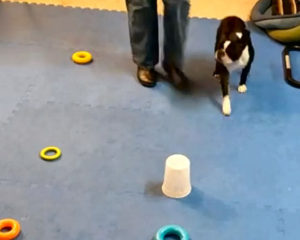
A distraction can be anything that’s different. It can be sounds, like someone banging pots in the next room. It can be something in motion, like a tennis ball rolling across the training area. It can be a combination of both, like a sound-and-motion toy in the room.
The most difficult distraction we’ve ever dealt with was from our very first dog training teacher. For the “graduation” class, he brought freshly-made french fries and spread them around the floor, expecting us and our dogs to navigate across the room through the delicious smells. Every dog/handler team did it. You can, too. Tailor the level of distraction to your dog’s interest. Start with things they don’t care much about and increase the difficulty as their skills improve.