We heard from a long-time friend this week, reaching out for training after acquiring a new dog. We actually met her at our dog training club, so we know she knows how dog training works. But, like anyone with a new dog, there’s so much to teach it can get a bit overwhelming.
No matter how many dogs you’ve owned, it’s always a good idea to either take class or follow guidance from an expert. We always take new family dogs to somebody else’s class. It helps you focus on the things that are important and set your priorities.
First things first
Our friend’s new-to-her dog is a four-year-old French Bulldog retired from the show ring. We also know the breeder of the dog, so know that she’s had a great life. Her issues at the moment are pretty common for a retired show dog. She’s fine in big, noisy, crowded venues. But she has no idea how to act on a walk around the neighborhood.
The dog is, in our friend’s words, “ is dog and people reactive when we are out in the neighborhood.” Further questions revealed that the dog is noisy and overly-excited, but not aggressive. That description could apply to at least half the dogs out there.
Side Note: Watch your language
Unfortunately, while we’re all using the word “reactive” correctly here, it’s time to stop using it to describe your dog. The outside world interprets “reactive” as aggressive. Because the meaning has been changed, unless your dog truly is a biter or fighter, don’t use it. People hearing it, even some trainers, will make assumptions about your dog that may escalate the situation. Excitement isn’t aggression. Barking isn’t aggression. Reactivity is now synonymous with aggression.
We tell our training classes to use “excited” or “exuberant” to describe their dogs instead. It conveys joy and happiness, rather than anything darker.
Action plan
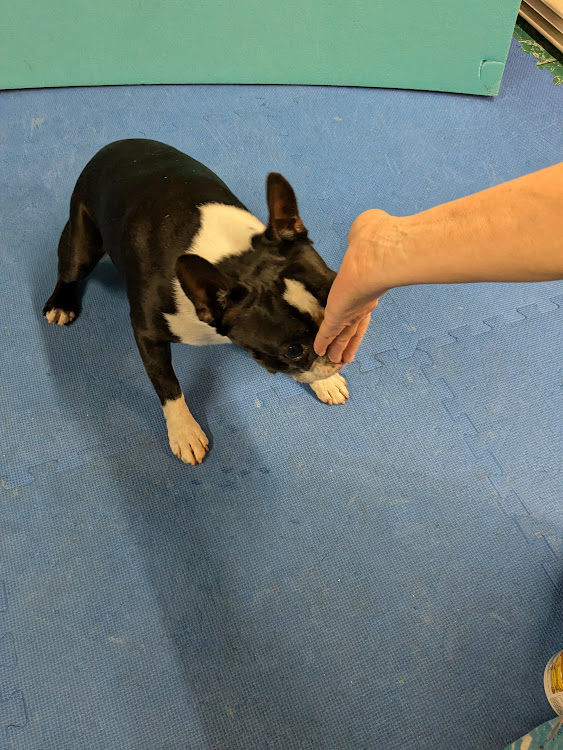
The first training game we’re going to play with our friend’s dog is “Touch!” It’s the most useful game for getting your dog’s focus back on you and away from whatever is causing them to misbehave. Before you use it this way, the dog has to love the game. It doesn’t take long for dogs to learn it and love it. If you start today, in three days your dog will be nose-bopping like crazy.
The next part of using “Touch!” out in the wild requires a bit of effort from you. If your dog has already spotted something fascinating, it’s too late. Even if your dog adores the game, it can’t compete with squirrel watching. You have to keep scanning the area, trying to locate possible trouble spots before your dog sees them. As soon as you do, move backwards a step or so, stick out your hand and say “Touch!” The added benefit is that you start moving away from the distraction. With luck, your dog will never know they missed the bunny running across your path.