An accomplished Obedience competitor we know once told us, rather huffily, that she doesn’t teach her dog tricks. Like it was beneath her dignity. Fast forward to now. Her current dog, a very soft and rather timid being, loves learning tricks and knows a bunch of them. When the dog wants attention doesn’t bark or paw at her mom. She “sits pretty.” And no one can resist that. Especially not her mom.
Why teach tricks? Because it’s fun! There’s no pressure to achieve anything. It creates joy for you and your dog. It not only brings the two of you closer in synch, it deepens understanding and trust between you. And, as important as any other factor, it increases your dog’s confidence. Dogs love knowing stuff. And they love knowing they know stuff.
All dog tricks fall into one of two categories:
The dog has to manipulate an object in some way.
Or
The dog has to manipulate his/her body in some way.
Get a move on
Of the two, getting the dog to move on their own is probably easier. Luring works for getting dogs to move where and how you want them. Luring introduces the motion for everything from “Puppy Push-ups” to “Spin!” All of the dog-motion tricks start with a lure to familiarize your dog with the action.
From there, it’s a matter of practicing with a consistent name for the motion and/or a unique hand signal. Dogs can learn either or both. If you want your dog to know the verbal and movement cues separately, start with both and as your dog becomes proficient, separate words from motion. Use the verbal command sometimes, the hand signal other times. Most dogs will show a preference for one kind of signal over the other. Notice which your dog responds to more quickly and consistently.
When your dog is familiar with the trick, whatever it is, you can start “fading” the lure. Try it without holding a treat sometimes, making sure to reward your dog immediately after completing the trick. Your dog will start to understand that the reward will always be there, even if they don’t see it before they start.
Tricks with props
Without hands and opposable thumbs, dogs’ interaction with objects is more limited than people’s. But that doesn’t have to limit your imagination – or your dog’s.
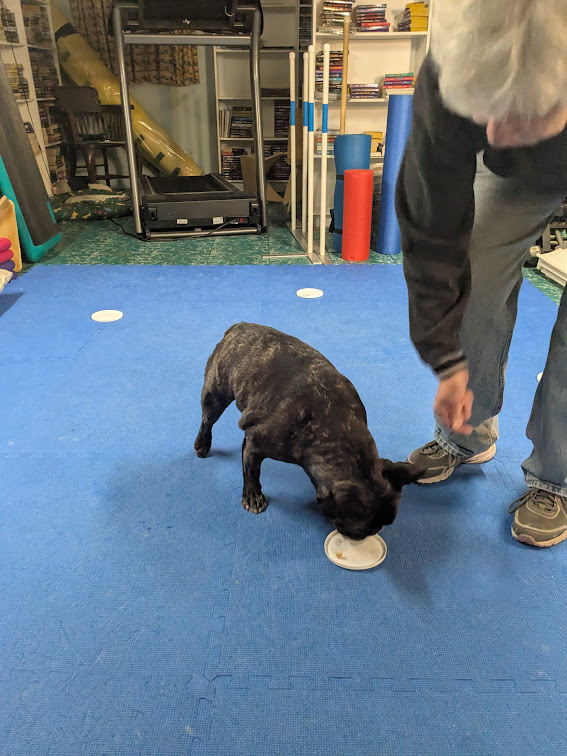
If there’s a trick with objects you want your dog to learn, the process is pretty simple. Just present the object to your dog and reward the interaction you want. If your dog isn’t used to checking out new objects, it may require some patience. Even with something dogs enjoy as much as Target Training, it may take a few sessions for the dog to figure out you want them to bop it, not pick it up, chew on it, throw it around, etc.
Just be patient. Dogs learn by the timing and placement of rewards. Generally speaking, they figure out pretty quickly what gets them “paid” and what doesn’t. That doesn’t mean you can’t talk to them, encourage them, and tell them how wonderful they are. When they do figure it out, you’ll see how happy and proud they are.
Nothing in particular
If you don’t have a particular behavior or trick in mind, you can always let your dog’s actions direct the game. Like the Boxey game, if there’s no right or wrong answer, the dog has the opportunity and freedom to be creative and try new things. Your dog may create an entirely new game. Even if you and your dog are the only ones who know the rules, it’s still a game worth playing.
By all means take video of your training game learning sessions as well as the finished products. While you may want to show off your dog’s brilliance on social media, the recordings you’ll cherish most will probably be ones where you’re just starting your games and learning together. The accolades are nice, but the most precious memories will be the ones where you and your dog goofed around and had the most fun.