What’s the difference between luring and rewarding your dog?
Picture yourself planning a driving trip to someplace you’ve never been. One way of getting there is just entering it into your map app on your phone and following directions. Presto! You have arrived. You may have absolutely no idea how you got there. And you might not have a clue how to get home. But it worked.
In the olden days, you’d take out a road map, plot your trip, consider the alternatives, use your familiarity with traffic patterns, and choose the best option. You’d know where you drove, how you got to your destination, and how to get home again.
Easier isn’t better
The GPS option is certainly easier. So is luring your dog. That doesn’t mean it’s better. If you always stick a treat in front of your dog’s nose to get them to do something, they aren’t learning. They’re following directions.
The point of training (aside from having fun with your dog) is teaching them how to do stuff and make good decisions. You don’t want to have to tell your dog what to do all day every day. It can get exhausting.
Instead, teach them how to think and reward good decisions.
More tools in the kit
There is a place for luring. It’s in the initial, teaching stage of a new behavior. “Spin!” is a good example. While some dogs may spin around naturally, it’s not a given. Luring the dog into a spin is the easiest way to show them what you want them to do. It has the added benefit of showing the dog the arm motion you’ll use to signal a spin.
While it may not be a natural behavior, it’s one that most dogs learn quickly and love doing. It transitions easily from luring to rewarding.
Luring and rewarding
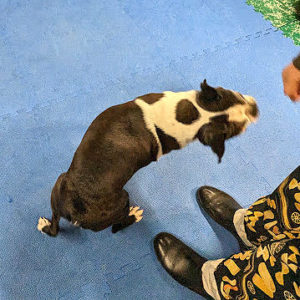
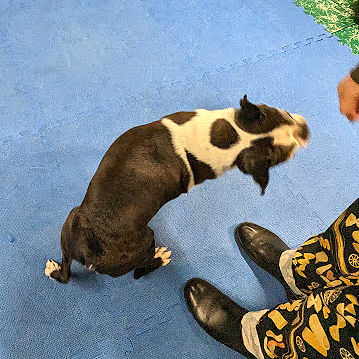
Luring is having a treat in your hand and leading your dog to behave a certain way. Rewarding is asking the dog for something and giving a treat immediately after they do it. The timing has to be so close that the dog knows their action prompted a great reward. Booker has gotten rewarded for spinning, so he’ll do it repeatedly.
The premise here is “What gets rewarded gets repeated.” If your dog got a treat for spinning, chances are strong they’ll spin again. As long as the reward comes right after, the dog will retain the link between the action and its yummy result.
Making dogs think
Dogs aren’t stupid. When they know that something great is going to happen if they behave a certain way, they do it. They’re motivated to act.
Better yet, dogs will puzzle out what they have to do to earn that treat. When you have a dog trained with positive reinforcement, they’ll try all kinds of things to see what gets them the goodies. As your dog becomes increasingly confident, they’ll show you more and different actions to win the reward.
Patience pays
The hardest thing about dog training is being patient and letting your dog think. Introducing new things with a lure starts your dog on the path. Fading the lure and replacing it with a reward solidifies your dog’s grasp on the behavior. You’ll know you’re there when you can wave your hand in a circle and your dog spins like a top. Make sure that good dog’s reward is close at hand.